Your Birth Chart's Blueprint for Every Area of Life
Where Planets Live and What They Activate
★ What Are the Astrological Houses?
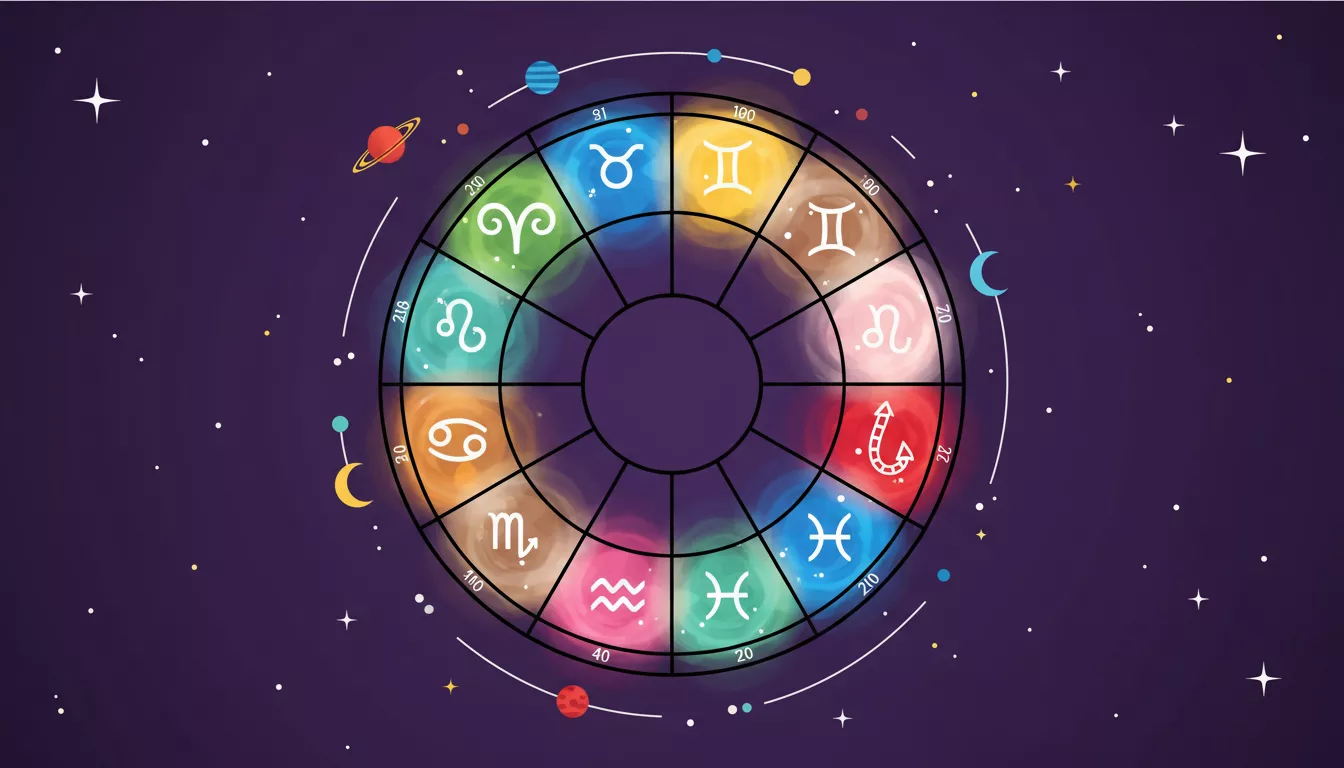
If the zodiac signs describe how energy expresses itself, the houses describe where that energy shows up in your life. Think of your birth chart as a wheel divided into 12 slices. Each slice is a house, and each house governs a specific area of life - money, relationships, career, health, spirituality, and everything in between. When a planet lands in a house, it brings its energy to that domain.
Your rising sign sets the whole system in motion. Whatever sign was on the eastern horizon when you were born becomes the starting point - the first house cusp. From there, the signs rotate through the remaining 11 houses in order. That's why two people born under the same sun sign can have wildly different life experiences. Their planets might be in the same signs but fall in completely different houses, activating different areas of life.
The house system is what makes astrology personal. Without houses, you'd know what kind of energy you carry (signs) and how that energy behaves (planets), but not where it plays out. A person with Venus in Scorpio experiences intense, all-or-nothing love - but Venus in Scorpio in the 10th house channels that intensity into their career and public image, while Venus in Scorpio in the 4th house channels it into family bonds and the emotional atmosphere of home.
The concept of astrological houses dates back over 2,000 years. Several house systems exist today - Placidus, Whole Sign, Koch, and Equal House are the most common - and astrologers disagree on which one is most accurate. The differences between them are technical and mainly affect the exact degree where each house begins. But the core meaning of each house stays consistent across all systems.
★ How Houses Work in Your Chart
Every birth chart contains all 12 houses, but not every house will have planets in it. With 10 major celestial bodies (Sun, Moon, Mercury, Venus, Mars, Jupiter, Saturn, Uranus, Neptune, and Pluto) spread across 12 houses, at least two houses will always be empty. An empty house doesn't mean that area of life is absent or broken - it just means there's less planetary emphasis there. The sign on the cusp still tells you how that area of life operates for you.
Houses with multiple planets, on the other hand, become focal points in your life. If three planets sit in your 7th house, relationships are going to be a central theme whether you want them to be or not. The universe put extra emphasis there, and you'll feel it. These clustered houses demand attention and tend to produce the most significant events and growth.
The houses also group into patterns. Houses 1-6 are the personal houses - they deal with your individual experience (self, money, mind, home, pleasure, health). Houses 7-12 are the interpersonal houses - they deal with your relationship to others and the world (partnerships, shared resources, beliefs, career, community, the unconscious). This division reflects a natural arc: you spend the first half of the chart developing yourself and the second half learning how to exist in relationship with everything outside yourself.
★ Houses by Type
Astrologers group the 12 houses into three categories based on how their energy operates. Understanding these groupings helps you see patterns in your own chart.
🔺 Angular Houses (1, 4, 7, 10)
The most powerful houses. They mark the four corners of the chart - the Ascendant, IC, Descendant, and Midheaven. Planets in angular houses express themselves boldly and visibly. These houses initiate action and define the framework of your life: identity, home, partnerships, and career.
📐 Succedent Houses (2, 5, 8, 11)
These follow the angular houses and stabilize what was initiated. They govern resources, values, and what you build over time. Think of them as the "consolidation" houses - where you accumulate wealth, develop creative talents, deepen intimate bonds, and build community.
🔄 Cadent Houses (3, 6, 9, 12)
The most adaptable houses. They handle transition, learning, and preparation. Cadent houses process and refine experience - daily communication, health routines, philosophical understanding, and spiritual dissolution. Planets here work more subtly but produce deep mental and spiritual growth.
Natural Sign: AriesRuler: MarsIdentity, appearance, first impressions, physical body
The first house is where you begin. It's the house of self - your physical body, your personality, the way you present yourself to the world, and the energy you project when you walk into a room. Whatever sign sits on the cusp of your first house is your rising sign, which is why this house is considered the most personal point in the entire chart. Planets here shape your core identity in obvious, visible ways. Someone with Mars in the first house carries an assertive, physical energy that others notice immediately. Venus in the first house gives natural charm and an attractive presence. The first house isn't who you think you are - it's who you actually are when you stop thinking about it.
The second house governs what you own and what you value - including how you value yourself. This is the money house, and planets here directly influence your earning style and financial instincts. Jupiter in the second house tends toward financial abundance and generosity. Saturn here can mean financial discipline but also anxiety about money. But it goes deeper than your bank account. The second house reveals what you find worth investing in, what gives you a sense of security, and what you'd fight to keep. Your relationship with material possessions, your spending habits, and even your sense of self-worth all live in this house. People with a packed second house are often very connected to the physical world - they need tangible proof that life is working.
♊ The Third House House of Communication
Natural Sign: GeminiRuler: MercuryCommunication, siblings, learning, short trips
The third house is how you think and how you express those thoughts. It rules communication, writing, speaking, daily interactions, and the way your mind processes information. Planets here influence your communication style directly - Mercury in the third house makes you articulate and quick-witted, while Neptune can make your communication more intuitive but also vague. This house also governs your relationship with siblings, neighbors, and your immediate environment. Short trips, daily commuting, early education, and casual learning all fall under the third house. It's the house of your mental habits - how you gather information, what kind of conversations you seek out, and whether you process life through words, logic, or a combination of both.
♋ The Fourth House House of Home
Natural Sign: CancerRuler: MoonHome, family, roots, emotional foundation
The fourth house sits at the very bottom of the chart, and appropriately, it represents your foundation. This is the house of home, family, ancestry, and your emotional roots. The sign on this cusp and any planets here reveal what home means to you - not just the physical space but the emotional experience of feeling safe and grounded. The Moon in the fourth house creates someone who needs a nurturing home environment and is deeply connected to family. Pluto here can indicate transformation through family dynamics or power struggles in the home. This house also governs your relationship with your parents (traditionally the mother or more nurturing parent) and your sense of belonging. As you age, fourth house themes become more prominent - it represents the private life you build, the traditions you carry, and the legacy you want to leave within your family.
♌ The Fifth House House of Pleasure
Natural Sign: LeoRuler: SunCreativity, romance, children, self-expression, fun
The fifth house is where astrology gets fun. This is the house of creativity, pleasure, romance, children, and anything you do purely for the joy of it. Planets here light up your creative expression and your capacity for play. The Sun in the fifth house produces natural performers and people who need creative outlets like they need oxygen. Venus here attracts romantic attention effortlessly and gives a genuine talent for making things beautiful. This house governs the early, exciting phase of romance - the butterflies, the flirting, the getting-to-know-you stage before things get serious (serious partnerships belong to the seventh house). It also rules your relationship with your children, your hobbies, gambling instincts, and any form of self-expression that feels authentic rather than obligatory. A vibrant fifth house means you know how to have a good time.
♍ The Sixth House House of Health
Natural Sign: VirgoRuler: MercuryHealth, daily routines, work, service
The sixth house manages the unglamorous but essential parts of life - your daily routines, your health habits, your work environment, and your acts of service to others. This isn't the career house (that's the tenth). The sixth house is about the daily work you do and how you show up for it. Mercury in the sixth house creates an organized, detail-oriented worker. Mars here brings high energy to daily tasks but also a risk of overwork and burnout. Health-wise, this house reveals your physical vulnerabilities, your relationship with fitness and nutrition, and how stress manifests in your body. Planets here often correlate with specific health themes you'll navigate throughout life. The sixth house also governs pets, employees, and anyone you serve or who serves you. It's the house that asks: what's your relationship with discipline, and does your daily life actually support your wellbeing?
♎ The Seventh House House of Partnership
Natural Sign: LibraRuler: VenusMarriage, partnerships, contracts, open enemies
The seventh house sits directly opposite the first house, and it represents everything the first house is not - other people. Specifically, it governs committed partnerships, marriage, business partners, and significant one-on-one relationships. The sign on your seventh house cusp describes what you're attracted to in a long-term partner and the qualities you project onto others. Venus in the seventh house craves partnership and brings natural grace to relationships. Saturn here can delay marriage but ultimately creates very stable, enduring bonds. This house also rules contracts, negotiations, and open adversaries - people who challenge you directly. There's an interesting pattern where people attract seventh house partners who embody the sign on that cusp, even if those qualities seem opposite to their own personality. It's the house of mirrors - the people you draw into your life often reflect the parts of yourself you haven't fully owned yet.
The eighth house is the most intense section of the chart. It governs transformation, shared finances, intimacy, death and rebirth cycles, and the hidden dimensions of life. Where the second house is your money, the eighth house is other people's money - inheritances, taxes, loans, insurance, and the financial entanglements that come with deep partnerships. Pluto in the eighth house is a powerhouse placement, creating someone who experiences profound transformations throughout life and has an uncanny ability to perceive what's hidden. The Sun here produces people drawn to taboo subjects, psychology, and anything beneath the surface. This house also governs sexuality in its deepest form - not casual attraction (that's the fifth house) but the vulnerable, power-laden intimacy that changes you. People with strong eighth house placements are drawn to crisis work, investigation, research, and anything that requires looking at what most people avoid.
♐ The Ninth House House of Philosophy
Natural Sign: SagittariusRuler: JupiterTravel, higher education, philosophy, religion, law
The ninth house expands your world. It governs long-distance travel, higher education, philosophy, religion, law, and the search for meaning. Where the third house handles everyday thinking and short trips, the ninth house is about the big questions - why are we here, what do I believe, and what happens when I leave my comfort zone. Jupiter in the ninth house is in its natural home, creating an insatiable appetite for knowledge, adventure, and cultural exploration. Mercury here makes a lifelong student and often a teacher or published writer. This house rules universities, foreign cultures, international connections, legal matters, and publishing. People with strong ninth house placements are rarely satisfied staying in one place physically or intellectually. They need to explore, question, and build a worldview that's genuinely their own. The ninth house asks the question that matters most: what do you believe, and did you choose those beliefs or inherit them?
♑ The Tenth House House of Career
Natural Sign: CapricornRuler: SaturnCareer, public reputation, authority, ambition
The tenth house sits at the very top of the chart - the most visible, public point - and it governs your career, reputation, and public image. This is how the world sees you professionally and the legacy you're building in public life. The sign on the tenth house cusp (called the Midheaven or MC) is one of the most important career indicators in the chart. Saturn in the tenth house builds careers slowly but creates lasting professional authority. Jupiter here opens doors to opportunity and recognition, sometimes with surprising ease. The tenth house also governs your relationship with authority - both how you handle it and how others perceive your authority. It traditionally represents the father or more public-facing parent. Your tenth house describes not just what job you do but what you're known for, the reputation you cultivate, and the professional mountain you're climbing. People with a packed tenth house are often ambitious and publicly visible, for better or worse.
♒ The Eleventh House House of Community
Natural Sign: AquariusRuler: UranusFriendships, groups, goals, social causes, hopes
The eleventh house governs your social world beyond one-on-one relationships. It rules friendships, group memberships, social networks, your hopes for the future, and the communities you belong to. Where the fifth house is personal creativity, the eleventh house is collective creation - what you build with and through other people. Uranus in the eleventh house attracts unconventional friend groups and drives involvement in progressive causes. Venus here makes a social magnet who genuinely enjoys group settings and maintains friendships effortlessly. This house reveals the kind of friends you attract, the groups you gravitate toward, and whether you're a natural joiner or a permanent outsider by choice. It also governs humanitarian concerns - what you want to change about the world beyond your personal life. Your long-term goals and aspirations live here too, especially the ones that connect to something larger than yourself. The eleventh house asks: who are your people, and what are you building together?
The twelfth house is the final house of the chart, and it governs everything hidden - your subconscious mind, your dreams, your blind spots, and the parts of yourself you don't fully understand. It's associated with spirituality, isolation, institutions (hospitals, prisons, monasteries), and the unseen forces that shape your life from behind the scenes. Neptune in the twelfth house intensifies spiritual sensitivity and psychic awareness but can also create confusion about boundaries between self and other. The Moon here produces deep, often unexplained emotional currents and a rich dream life. This house has a reputation for being difficult, and it can be - it rules self-undoing, addiction, and the patterns that trip you up repeatedly. But it's also the house of transcendence, artistic inspiration, and the deepest forms of compassion. People with strong twelfth house placements often work in healing, spirituality, or creative fields that channel something beyond the rational mind. The twelfth house is where you dissolve the ego and connect to something larger.
★ Houses and the Elements
The houses also connect to the four astrological elements, following the same Fire-Earth-Air-Water pattern as the signs. This creates a deeper layer of meaning beneath each house.
Element
Houses
Theme
Focus
🔥 Fire
1st, 5th, 9th
Identity, creativity, exploration
Action and inspiration
🌿 Earth
2nd, 6th, 10th
Money, health, career
Material and practical
💨 Air
3rd, 7th, 11th
Communication, partnerships, community
Social and intellectual
🌊 Water
4th, 8th, 12th
Home, transformation, subconscious
Emotional and spiritual
If you have many planets in the water houses (4th, 8th, 12th), your life tends to be driven by emotional and spiritual themes. Heavy fire house placements (1st, 5th, 9th) create a life oriented around personal identity, creative expression, and the pursuit of meaning through experience.
★ What About Empty Houses?
One of the most common questions in astrology is what an empty house means. The short answer: nothing dramatic. With 10 planets and 12 houses, at least two houses in every chart will be empty. Most charts have four or five empty houses. This is completely normal.
An empty house doesn't mean that area of life is dead or missing. It means there's less planetary tension and focus there. The sign on the empty house cusp still describes how that area operates for you - you just won't have as many dramatic events or challenges connected to it. Some astrologers describe empty houses as areas that run on autopilot. Things tend to go smoothly (or at least without major disruption) in those domains because there's no planet stirring things up.
To understand an empty house, look at the sign on its cusp and find the planet that rules that sign. Wherever that ruling planet sits in your chart tells you how the empty house gets activated. For example, if your 7th house is empty but has Sagittarius on the cusp, look at where Jupiter (Sagittarius's ruler) sits in your chart. That planet, its sign, and its house will color your partnership experiences even though the 7th house itself has no planets.
★ Frequently Asked Questions
What are the 12 houses in astrology?
The 12 houses are sections of a birth chart that each represent a different area of life. The 1st house governs identity, the 2nd covers money, the 3rd handles communication, the 4th is home, the 5th is creativity, the 6th is health, the 7th is partnerships, the 8th covers transformation, the 9th is travel and philosophy, the 10th is career, the 11th handles friendships, and the 12th is the subconscious.
How do I find what houses my planets are in?
You need a birth chart calculated with your exact date, time, and place of birth. The houses are determined by your rising sign, which sets the first house cusp. Use a birth chart calculator, enter your birth details, and look at which section each planet falls in.
What does an empty house mean in astrology?
An empty house simply means no planets were in that section of the sky when you were born. It does not mean that area of life is missing or unimportant. The sign on the cusp still influences that domain. Empty houses tend to run on autopilot - things in that area may come naturally without much drama.
Why is birth time important for houses?
Your birth time determines your rising sign, and your rising sign sets the starting point for all 12 houses. The house system rotates through the entire zodiac every 24 hours, so being off by even an hour can shift planets into different houses. Without a birth time, you can read planets and signs but cannot place them in houses.
Explore Your Birth Chart
Now that you understand the houses, explore the other building blocks of your chart. Learn your rising sign, check your moon sign, or see how the elements shape your personality.